
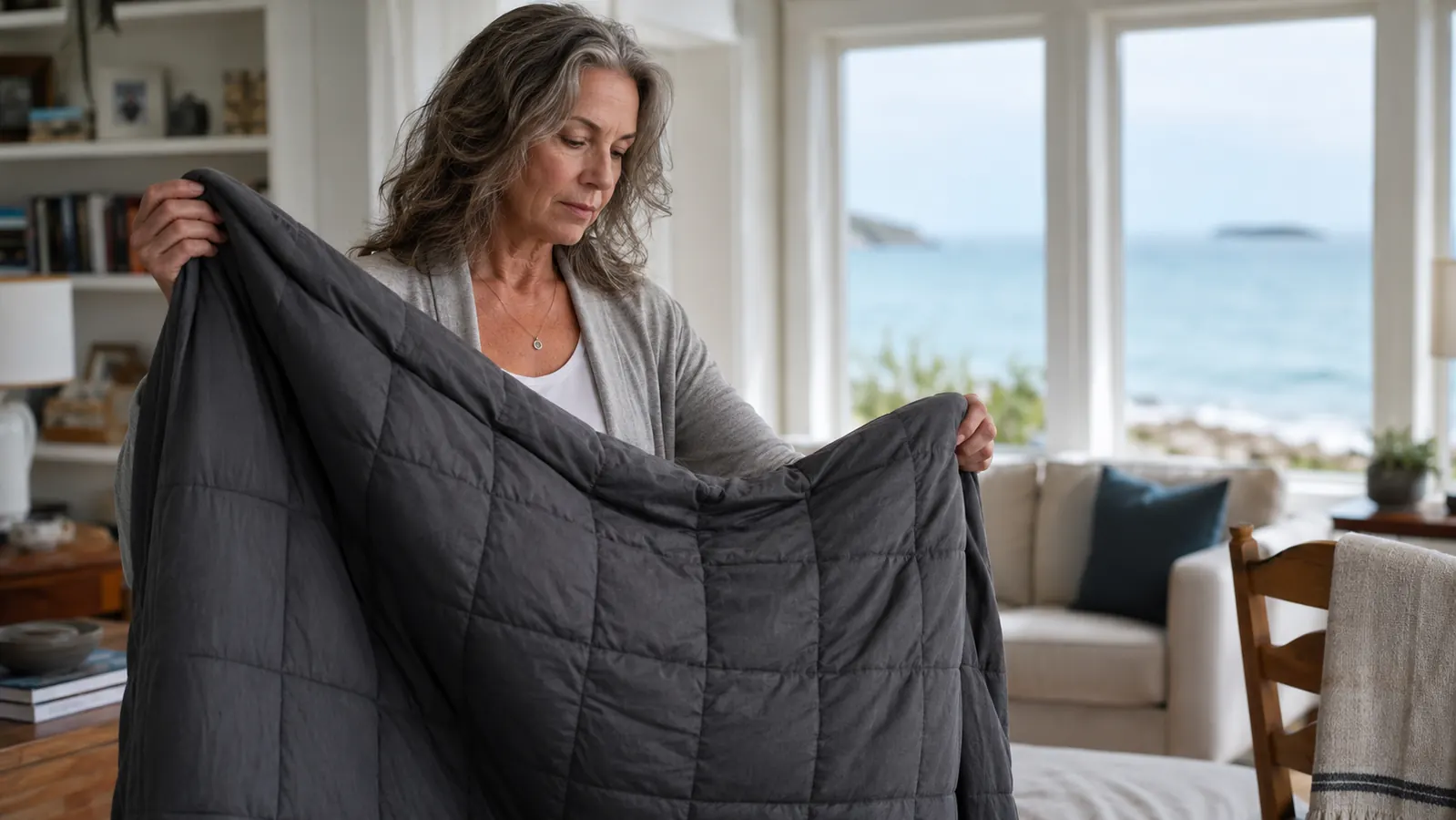
I bought my first weighted blanket based on a recommendation from a friend and returned it within two weeks. It was too heavy, too warm, and the fill shifted to one side by morning. My second one was better but still not right. The third one, a 15-pound Weighted Idea cooling cotton blanket, has been on my bed every single night for the past seven months. I sleep under it here near the coast where the air stays mild and a little damp, and it has never once made me wake up overheated. Getting to that third purchase taught me that choosing a weighted blanket comes down to five specific decisions, and if you make them in the right order, you will not need to go through what I did.
Most guides jump straight to brand recommendations. This one does not. Before I mention any specific product, I want to walk you through the five decisions that actually determine whether a weighted blanket works for your body, your sleep style, and your bedroom temperature. Because the best blanket in the world is wrong for you if you pick the wrong weight or the wrong fabric first.
Already know what you need? The Weighted Idea blanket is what I landed on after two wrong choices.
15 pounds, breathable cooling cotton, 4.6 stars from nearly 21,000 buyers. Comes in multiple sizes and weights. Worth checking current pricing before you read any further.
Amazon Check Today's Price on Amazon →Step 1: Choose the Right Weight for Your Body
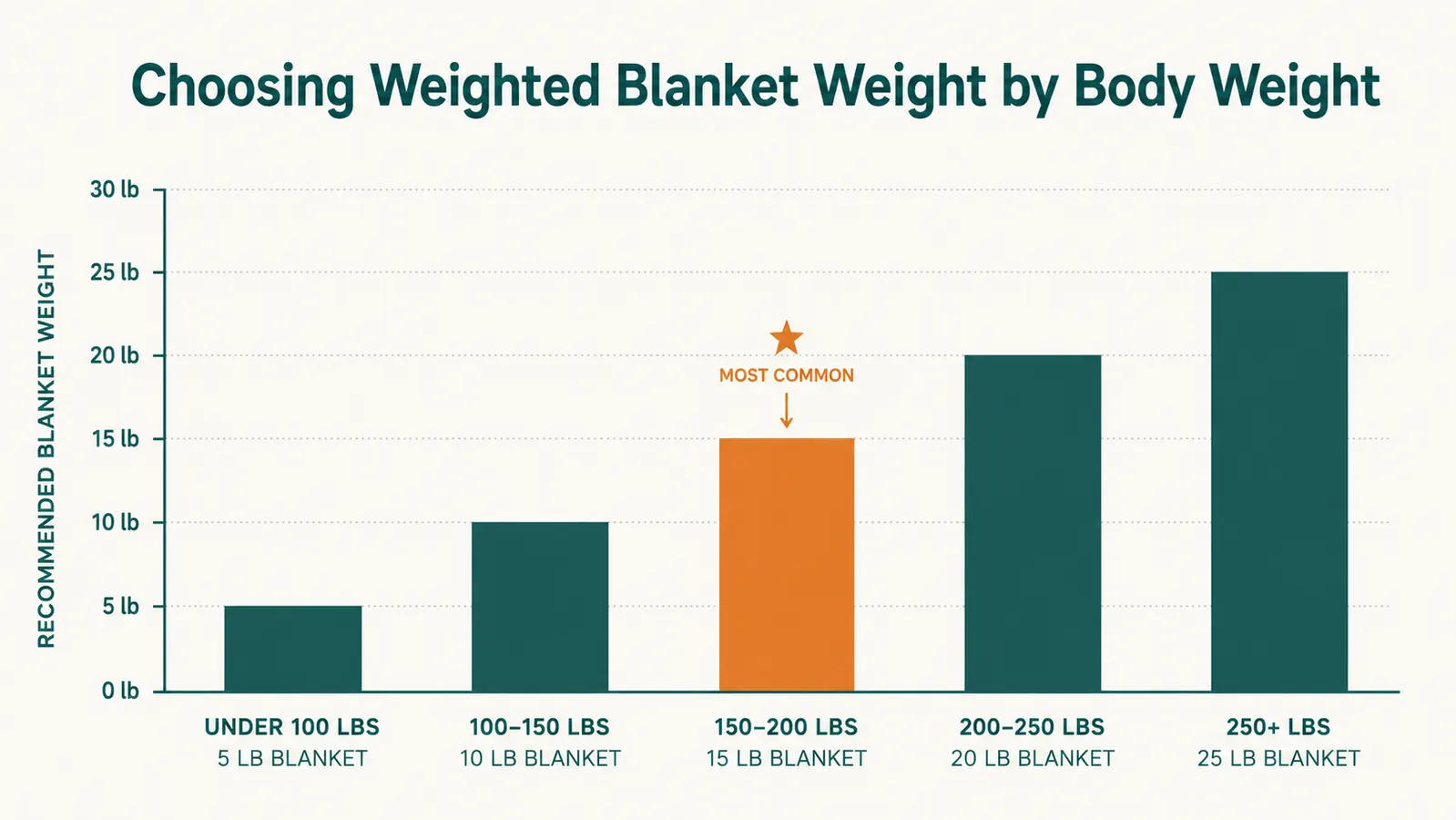
This is the decision that matters most, and it is the one people get wrong most often. The general guideline that occupational therapists and sleep researchers use is around 10 percent of your body weight, sometimes nudged up to 12 percent depending on your preference for pressure. For most adults, that means a blanket between 12 and 20 pounds.
Here is how I think about it practically. If you weigh around 130 to 160 pounds, a 15-pound blanket is the right starting point. If you weigh under 120 pounds, a 12-pound blanket will feel like a hug without feeling like a trap. If you are over 180 pounds, you will likely want a 20-pound option to feel the pressure effect properly. Too light and you feel nothing meaningful. Too heavy and you will wake up in the night feeling pinned, which is not restful at all. I am 148 pounds and my 15-pound Weighted Idea blanket hits the pressure sweet spot: I feel held in, not held down.
One exception worth noting: if you have any joint pain, shoulder issues, or you tend to move a lot during sleep, start at the lower end of the range. A blanket that feels wonderful while you are still can feel restrictive when you shift positions in the night.
Step 2: Choose the Right Size
Weighted blankets are not the same as regular comforters. You do not want a weighted blanket to drape all the way to the floor on either side of your bed. That extra length creates an uneven pull that shifts the weight toward the edges and off your body, which defeats the whole purpose. The blanket should cover your body, not your bed.
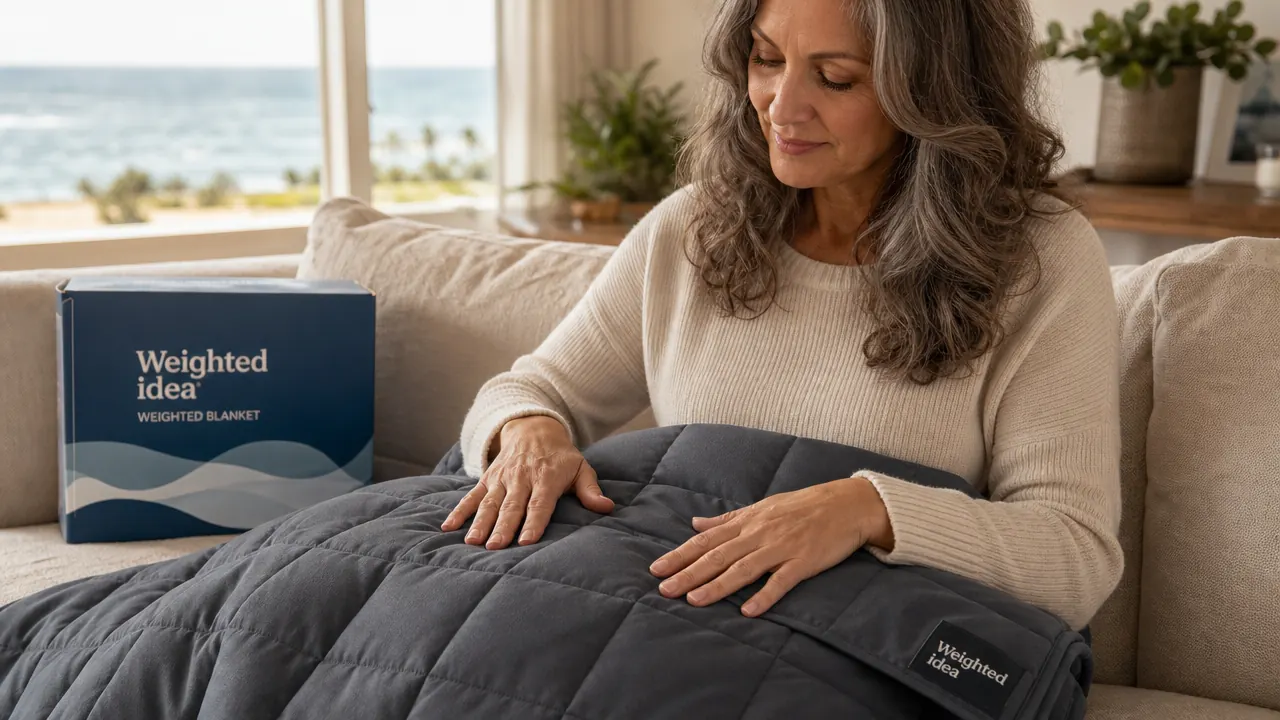
For a single adult sleeper, a throw-size blanket, roughly 48 by 72 inches, is usually ideal. It covers you from shoulders to feet with just a small overhang. That is the exact size I use with the Weighted Idea blanket and it lies perfectly flat on my body all night. If you share a bed and want to use it together, a larger 60 by 80 inch option makes sense, but keep in mind that sharing a weighted blanket means you may end up splitting the weight, which reduces the therapeutic effect for both of you. Most couples I know who love weighted blankets each have their own.
If you are buying for a child, consult your pediatrician first. Children's blankets are sized and weighted very differently, and the guidelines are stricter. Everything in this guide is written for adults.
Step 3: Choose Your Fabric Based on How You Sleep Temperature-Wise
This is where I went wrong the first two times. My first blanket was a minky plush fabric, which felt luxurious in the store but turned into a heat trap the moment I pulled it over myself in bed. The second was a polyester blend that was better but still trapped enough moisture to wake me up around 3 AM feeling clammy. The third, cotton, solved the problem.
Weighted blankets come in three main fabric categories. Minky or fleece-top blankets are warm and soft but run hot. They are best for people who are chronically cold, live in cool climates, or sleep in a room they keep at 65 degrees or below. Polyester blends are the middle ground: more breathable than fleece but not truly cooling. Cotton is the most breathable natural option. It allows airflow, wicks moisture, and does not retain body heat the way synthetics do. If you sleep warm, sweat at night, live somewhere humid, or share a bed with a warm-bodied partner, cotton is your answer. The Weighted Idea blanket I use is a breathable cotton shell and I genuinely do not overheat under it even in July with the windows open.
There is also a newer category: bamboo-viscose fabric, which is marketed as the most cooling option available. I have not tested one personally, so I cannot vouch for it. What I can say is that the cooling cotton on my Weighted Idea blanket has been more than sufficient for my sleep temperature, and I run warm.
Step 4: Understand the Fill Material and Construction Quality
The weight in a weighted blanket has to come from somewhere. There are two common fill materials: plastic poly pellets and glass micro-beads. This distinction matters more than most buyers realize.
Plastic poly pellets are cheaper to manufacture and are used in lower-priced blankets. They tend to be larger and can create a lumpy, uneven texture. More importantly, they are more likely to shift, bunch to one side, or make a rustling noise when you move. The stitched grid construction is supposed to keep the fill in place, but with larger pellets, gaps in the fill are more noticeable.
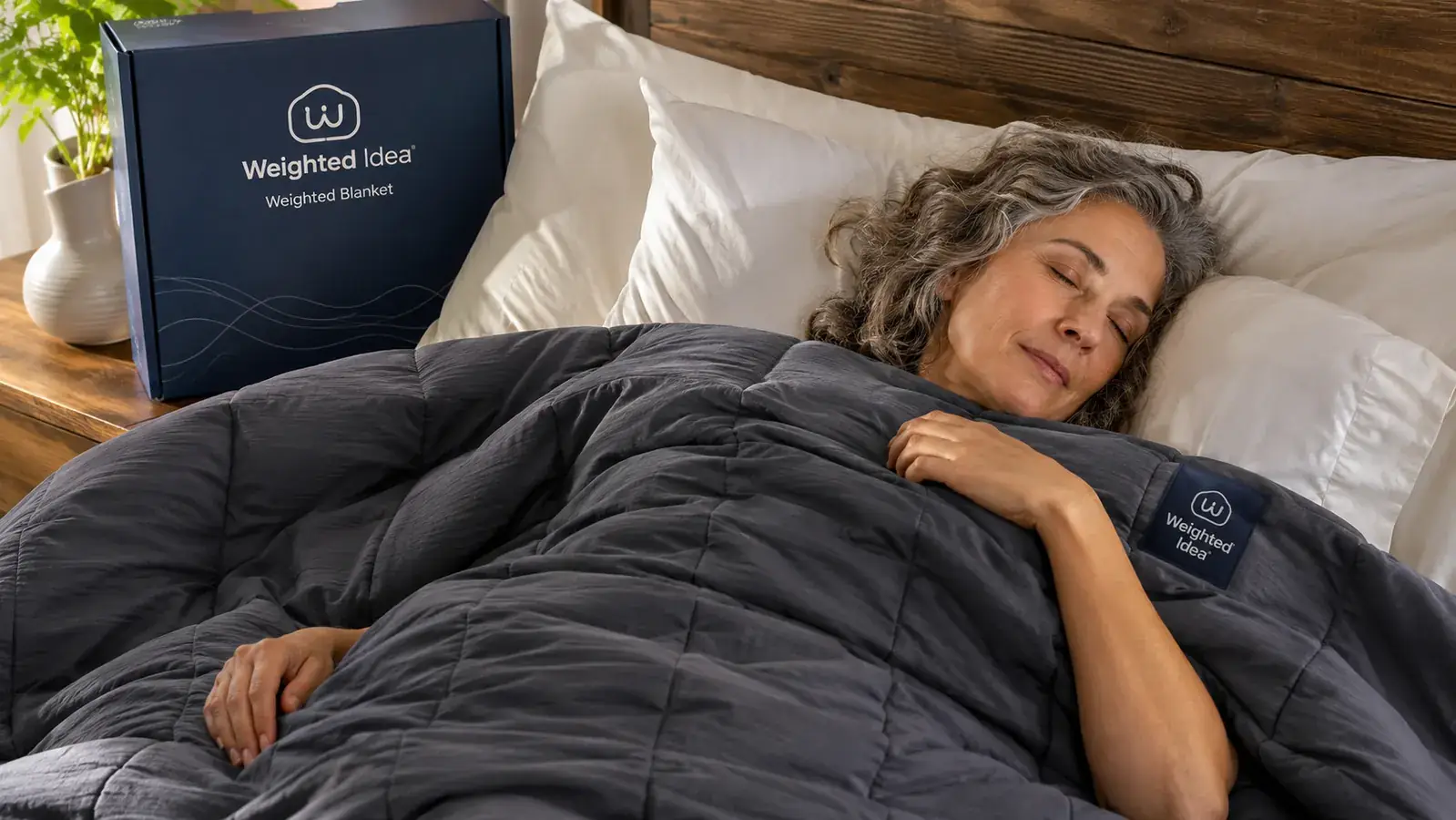
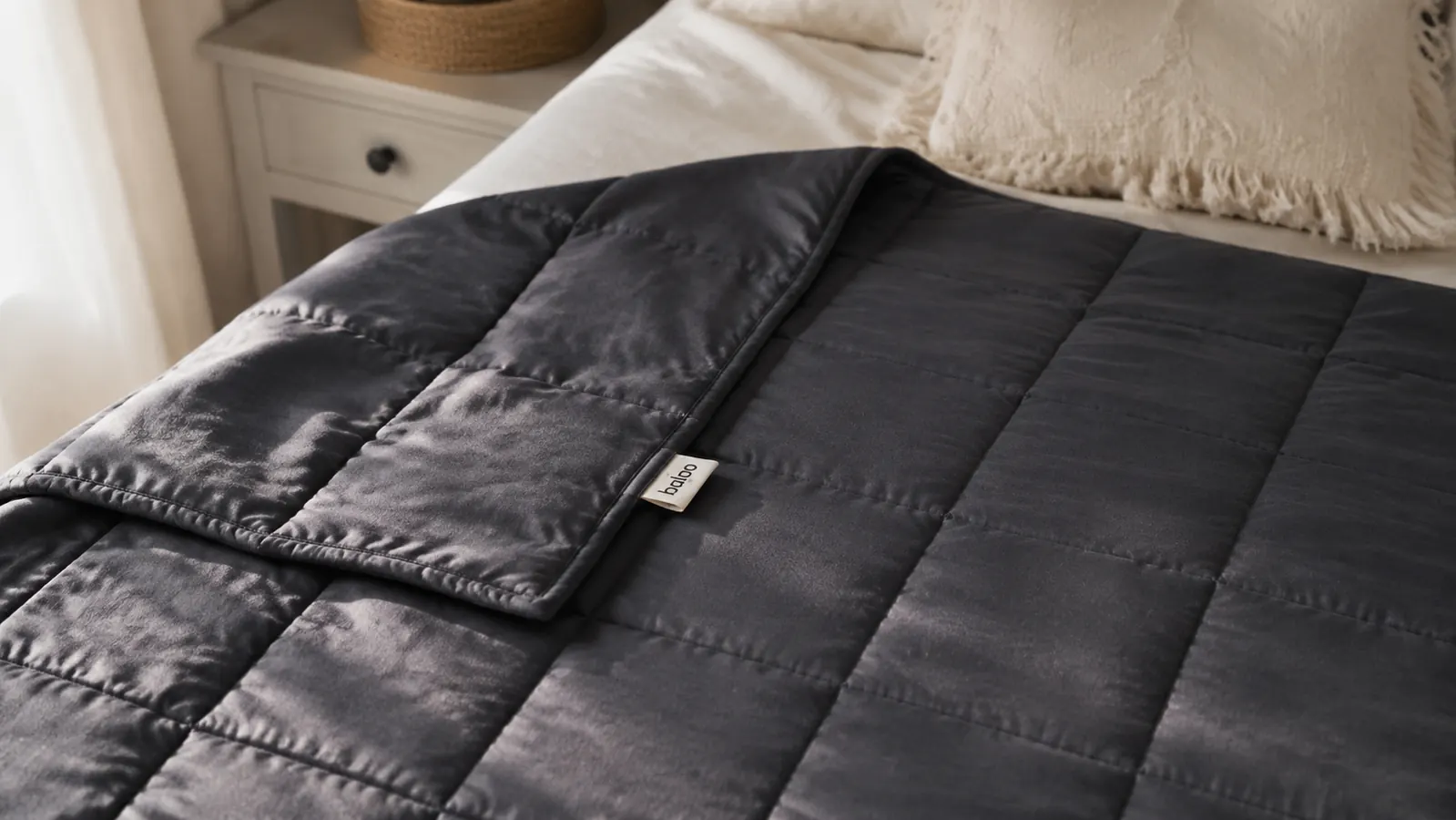
Glass micro-beads are smaller, denser, and distribute more evenly across the blanket. They also tend to be quieter and feel more uniform against your body. The Weighted Idea blanket uses glass beads in a tightly stitched grid pattern, and after seven months of nightly use I have not noticed any fill migration. The weight sits flat and even from edge to edge every morning. That consistent weight distribution is what makes the calming pressure effect work consistently. Uneven fill is one of the main reasons people return weighted blankets within a few weeks.
After seven months, the Weighted Idea blanket still sits flat and even from edge to edge every morning. The weight does not wander. That sounds like a small thing until you have slept under a blanket where it does.
One more construction note: check whether the blanket is machine washable before you buy. Most cotton-shell weighted blankets with glass bead fill can be washed in a large-capacity home machine on a gentle cycle, but some require a commercial laundromat machine because of the weight. The Weighted Idea blanket is home-machine washable, which matters to me. A blanket you cannot easily clean is a blanket you will eventually stop using.
Step 5: Avoid the Most Common Buying Mistakes
After going through this process twice incorrectly myself, and after talking to several friends who have had similar experiences, the same mistakes show up over and over. Here are the ones worth knowing before you click buy.
The first mistake is buying a blanket that covers the full bed. As I explained in Step 2, a weighted blanket is a body blanket, not a bedspread. The 48x72 size I use looks small laid out on the bed, but once I am lying under it, it covers me exactly right. Buy to fit your body, not your mattress.
The second mistake is ignoring return policies. Even if you do everything right, the sensory experience of a weighted blanket is personal. Some people love it the first night. Others take a week or two to adjust. Buy from a seller or retailer that gives you at least 30 days to return it if you decide it is not for you.
The third mistake is expecting instant results. The pressure effect is real, but it is not sedation. The first night under my Weighted Idea blanket I noticed I was breathing more slowly and felt less inclined to roll over and adjust. But the real improvement in how long I stayed asleep built up over two to three weeks of consistent use. Give it time.
The fourth mistake is buying too heavy because heavier sounds better. It does not. A blanket that is too heavy creates a subtle anxiety, not calm. Start at the recommended 10 percent of your body weight and only go heavier if you try that weight and feel like you want more.
What Else Helps When You Are New to Weighted Blankets
A weighted blanket works best when the rest of your sleep environment supports it. I use mine alongside a few other changes I made to my bedroom over the past couple of years. I keep the room cooler at night, usually around 68 degrees. I have darkening curtains on the windows facing east because the sun comes up early here near the water. And I do not use my phone in bed anymore, which was a harder habit to break than buying a new blanket.
The blanket is the piece that made the most noticeable difference in how quickly I fall asleep. But it works best when the room temperature is already in a comfortable range. If you sleep hot, pair your weighted blanket with a fan or open window. The cotton shell on the Weighted Idea blanket handles warm nights well, but it is not a substitute for actual airflow in a hot room.
If you want to read about my full long-term experience with the Weighted Idea blanket, including how the first few nights felt compared to six weeks in, see the detailed review I wrote at the link below. And if you are still on the fence about whether a weighted blanket is right for you at all, the reasons piece lays out the case for giving one a try.
The Weighted Idea blanket is the one I would buy again if I had to start over.
15 pounds, cooling cotton, glass micro-bead fill, stitched grid construction, home machine washable. 4.6 stars from nearly 21,000 reviews. Comes in multiple sizes and weights to match your body. Check current pricing and see which size is available today.
Amazon Check Today's Price on Amazon →