
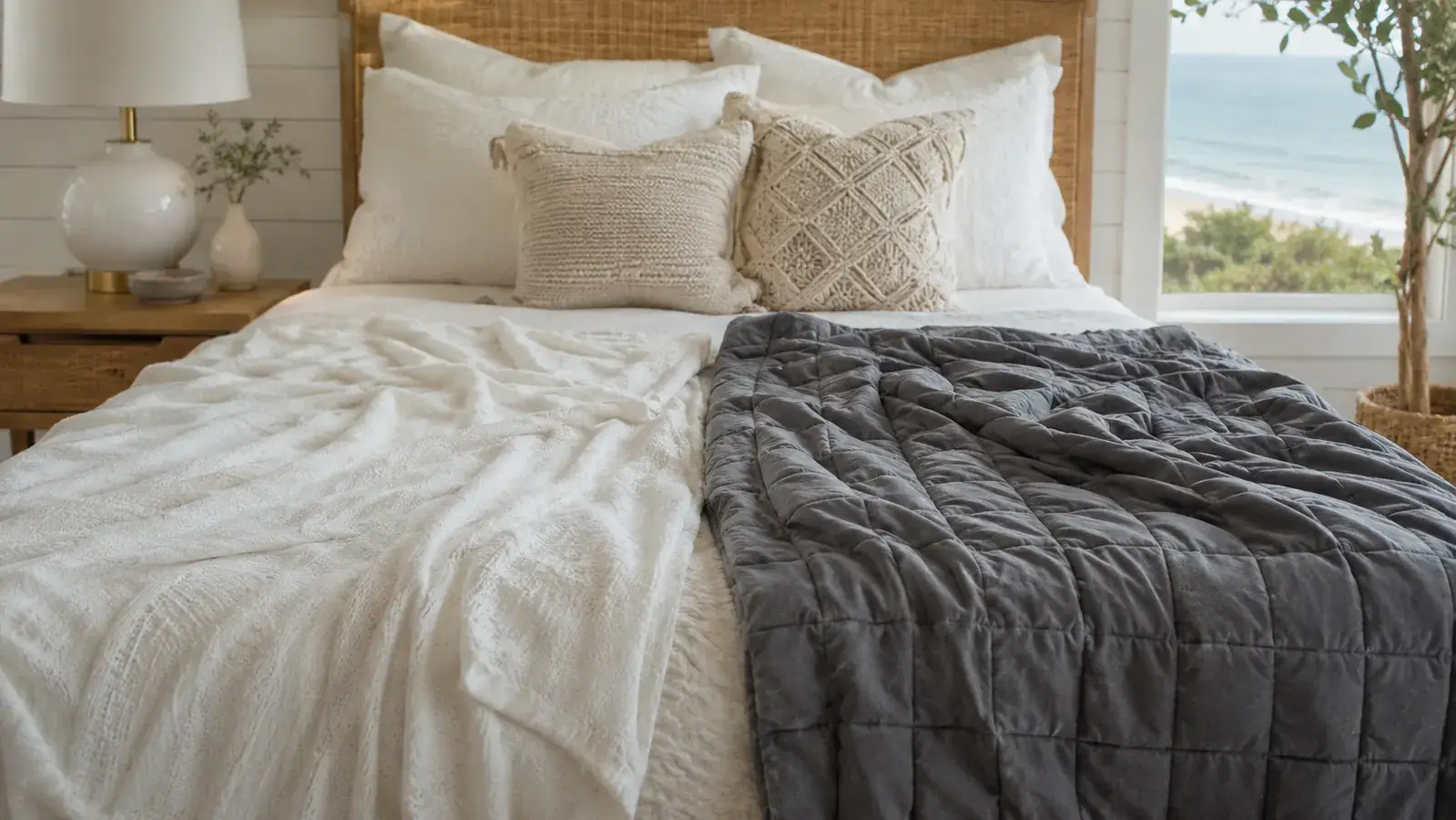
If you sleep reasonably well already, this comparison will not matter much to you. But if you are the kind of person who lies in bed for forty-five minutes waiting for sleep to arrive, or who wakes at two in the morning with a restless, almost buzzy feeling in your body, then the difference between a weighted blanket and a regular comforter is not a small thing. I know because I spent years on the wrong side of that line. I tried heavier comforters, thicker quilts, and every herbal tea anyone ever recommended. None of it addressed what was actually keeping me awake. The Weighted Idea cooling weighted blanket, a 15-pound cotton blanket in dark grey, finally did.
I want to be straightforward about what this comparison is and is not. A regular comforter does its job well: it keeps you warm, it feels familiar, and for people who sleep fine it is perfectly adequate. This piece is for adults who are not sleeping fine. If that is you, here is an honest look at what separates these two options and which one is actually worth your time.
| Cooling Weighted Blanket | Regular Blanket | |
|---|---|---|
| Weight | 15 lbs (distributed via glass bead fill) | 2-4 lbs (polyester fill or down) |
| Material | 100% breathable cotton shell, no polyester | Typically polyester microfiber or cotton-poly blend |
| Temperature regulation | Designed to sleep cool; cotton releases heat instead of trapping it | Varies; microfiber options tend to trap body heat overnight |
| Deep pressure effect | Yes; distributed weight mimics a firm, calming embrace | None; weight is too light to produce any pressure response |
| Time to fall asleep (personal experience) | 20-30 minutes after switching | 45+ minutes on restless nights |
| Machine washable | Yes (requires large-capacity machine, gentle cycle) | Yes (standard machine usually sufficient) |
| Size covered (this model) | 48 x 72 inches; fits twin or one side of a queen | Full/queen sizes typically 90 x 90 inches; covers full bed |
| Price range | Budget-friendly option | Mid-range to higher depending on fill and brand |
| Best for | Adults with restless nights, anxiety, or trouble winding down | Adults who sleep well and just need warmth and coverage |
Where the Weighted Blanket Wins
The most significant difference is one that does not show up on a spec sheet. When I pull the Weighted Idea blanket over myself, something in my nervous system seems to slow down. Occupational therapists call this deep pressure stimulation, and researchers have linked it to increased serotonin and melatonin production alongside lower cortisol. I am not going to oversell the science because I am not a clinician. What I can tell you is that the subjective experience is unmistakable. The blanket feels like a firm, steady hand on your shoulder telling you to stop worrying. My regular comforter never did that.
The cooling cotton shell is the second real advantage. I live near the ocean where evenings are mild, but I still tend to run warm once I am under any blanket for an hour or two. The Weighted Idea uses a 100-percent cotton outer shell with no polyester mixed in. Cotton breathes in a way that microfiber simply does not. On my old comforter I would start kicking off the covers around 1 AM. Under the weighted blanket I stay covered until morning. That matters for sleep continuity more than most people realize, because every time your body gets too hot and you shift around, you are pulling yourself toward lighter sleep or fully waking up.
The glass bead construction also distributes weight more evenly than you might expect. I was worried the blanket would feel lopsided or bunched toward one side, but the individual sewn pockets keep the beads spread across the full surface. When I lie flat on my back, the weight presses down gently across my chest, hips, and legs simultaneously. It does not feel heavy in a smothering way. It feels settled.

Where the Regular Blanket Wins
A standard comforter has two clear practical advantages. First, coverage. The Weighted Idea blanket in the 48-by-72 size is designed for one person. If you share a bed with a partner, you each need your own, because trying to share a 15-pound blanket is awkward and nobody wins. My regular comforter covered the whole king-sized bed and tucked in on both sides. If you sleep with a partner who does not want a weighted blanket, you will need to run both options side by side, which is what I do. The weighted blanket sits on my side; a light cotton blanket covers both of us.
Second, washing ease. The Weighted Idea blanket needs a large-capacity front-load machine or a trip to a laundromat. My regular comforter fit in my home washer without any trouble. This is not a dealbreaker but it is worth knowing ahead of time. I wash the weighted blanket every three weeks or so at the laundromat and find it a reasonable trade for what the blanket gives me at night. But if you have a small washer at home and cannot easily get to a laundromat, factor that in.
My regular comforter kept me warm. The weighted blanket kept me calm. Those are two completely different things, and I did not know the difference until I felt it.
If restless nights are the problem, a heavier comforter is not the answer
The Weighted Idea 15-pound blanket costs less than most standard comforters and targets the thing that actually keeps many adults awake: an unsettled nervous system. It is currently available on Amazon with over 20,000 reviews, rated 4.6 out of 5 stars.
Amazon Check Today's Price on Amazon →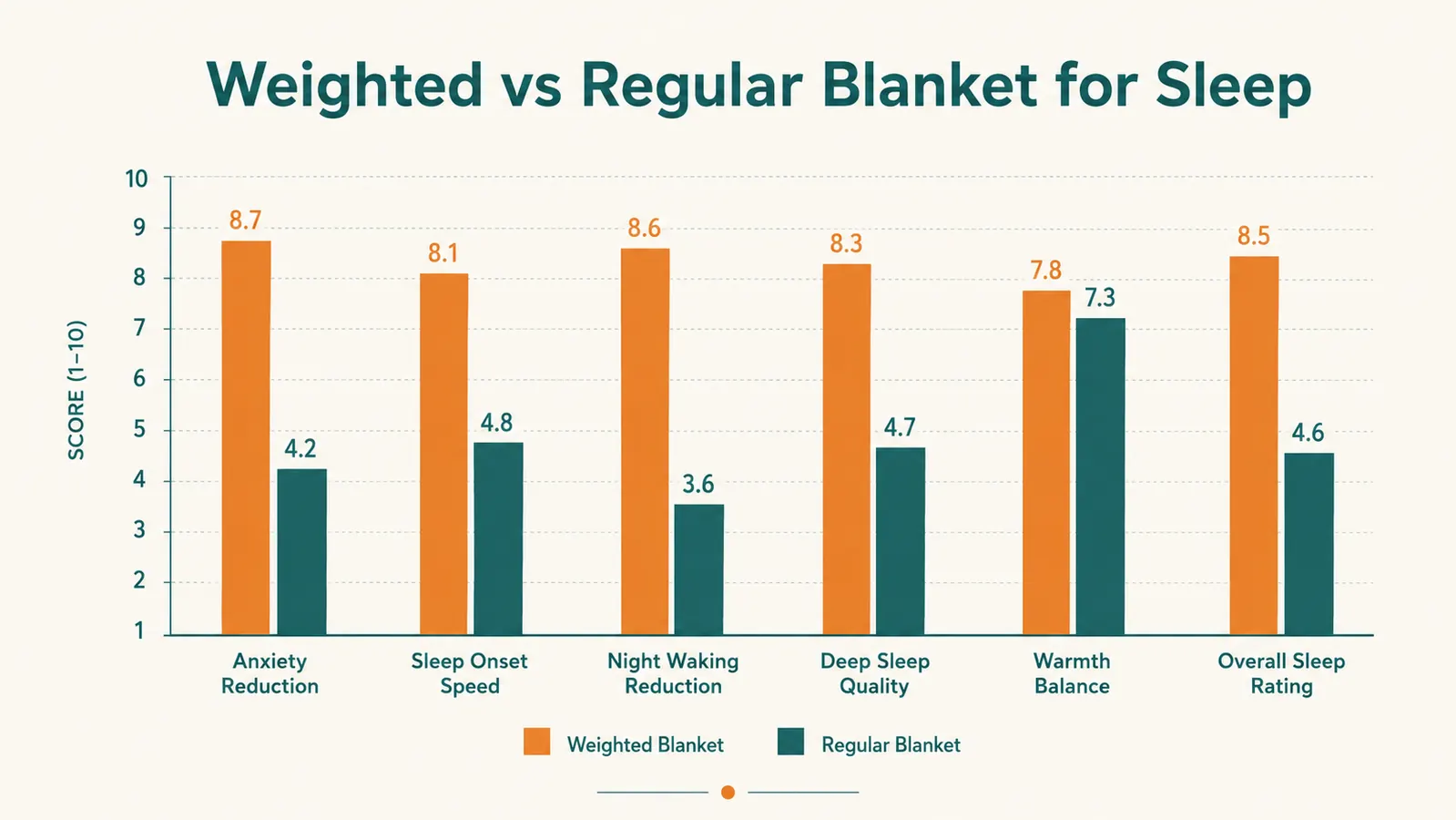
The Weight Question: 15 Pounds for Most Adults
One thing people wonder about when they first look at weighted blankets is whether the weight will feel oppressive. The standard guidance is to choose a blanket that is roughly 10 percent of your body weight. I weigh about 148 pounds, which puts the ideal range at 13 to 16 pounds, so the 15-pound option landed squarely in the right zone for me. If you are smaller or lighter, Weighted Idea offers options in 12 and 10 pounds. If you are larger, a 20-pound version is available.
A regular comforter gives you no such calibration. It weighs what it weighs. For most adults struggling with sleep, this is actually part of the problem: the blanket provides no useful sensory input at all. It is just warmth without structure.

Real Sleep Outcomes After Six Weeks
I want to be careful here not to promise you something I cannot guarantee. Weighted blankets are not a cure for insomnia and they will not fix sleep apnea or other medical conditions. But for the specific kind of restlessness I experienced, which was a mental and physical inability to settle, the improvement was real and consistent. After the first week I noticed I was falling asleep faster. After three weeks I noticed I was waking up less often in the middle of the night. After six weeks I had stopped counting the hours I was sleeping and had started just sleeping.
In those same six weeks my regular comforter sat folded in the closet. I tried it again once just to compare, and I noticed immediately how weightless and almost floating it felt by contrast. My body had adjusted to expecting that gentle downward pressure, and without it, something felt slightly off. I went back to the weighted blanket the following night and have not gone back since.
Who Should Buy Which
If you sleep well and just want a comfortable blanket that keeps you warm, a quality regular comforter is the right choice. There is no reason to spend money on weight and pressure if your nervous system settles easily on its own. A good cotton or down comforter suited to your climate is all you need.
If you lie awake with a restless body, take a long time to wind down at night, wake in the early hours feeling unsettled, or have ever described your nighttime state as anxious or buzzy, I would point you toward the weighted blanket before anything else. It is also worth considering if you are going through a major life transition, such as retirement, a move, or a health change, any of which can disrupt sleep patterns that used to be stable. I started having sleep trouble in my early sixties and spent three years trying solutions that did not address the root issue. The weighted blanket addressed it on the first night.
For people who share a bed: plan to use both. Each partner gets their own bedding on their own side. This is standard in many European households and once you set it up you will wonder why you ever tried to share one blanket in the first place.
Ready to stop lying awake waiting for sleep to arrive?
The Weighted Idea cooling weighted blanket is available in multiple weights on Amazon. The 15-pound dark grey cotton version is the one I use and recommend for most adults. Check the current price and read through the reviews from other adults who switched from regular blankets.
Amazon Check Today's Price on Amazon →