
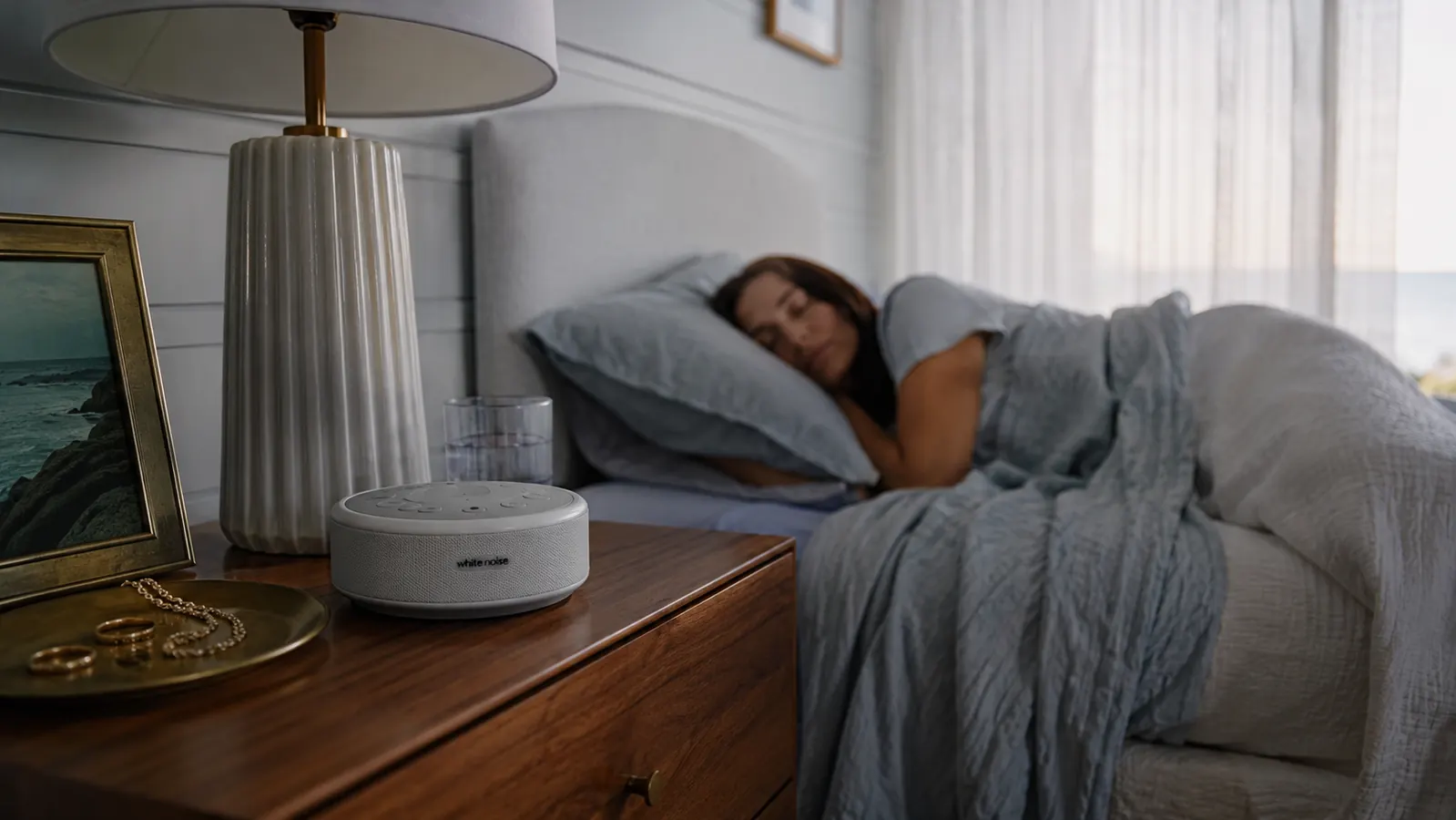
I live about four blocks from the water, which sounds lovely until a rental house three doors down hosts a group of twenty-somethings on a summer weekend. I also have a neighbor who starts his truck at 5:15 in the morning. And a dog next door who has strong opinions about raccoons. I have been telling myself for years that I am just a light sleeper, that this is just how retirement near the coast goes. Then I plugged in a white noise and sound machine eight weeks ago and I genuinely cannot believe I waited this long.
I am Margie. I spent thirty years as an artist and chef, mostly in commercial kitchens where sleep deprivation was almost a badge of honor. Now I am retired and I want to sleep. Really sleep. This white noise and sound machine, the BrownNoise, cost less than a dinner out. I was skeptical. Here is what eight straight weeks of nightly use actually looked like.
The Quick Verdict
A genuinely effective sleep sound machine with a wide enough range of sounds that most sleepers will find their fit, though the looping on a few tracks is more noticeable than it should be at this price.
Amazon Check Today's Price →Still waking up because of noise you cannot control? This is the fix I wish I had found sooner.
After eight weeks of nightly use, this is the sleep accessory I recommend most often when someone tells me they are a light sleeper. The 30 sounds, the soft night light, and the compact size make it work for a wide range of situations, from noisy neighborhoods to hotel rooms.
Amazon Check Today's Price on Amazon →How I Have Used It Over Eight Weeks
I put the BrownNoise machine on my nightstand on the left side of my bed, about eighteen inches from my head. The first thing I noticed is that it is genuinely compact, roughly the size of a wide coffee mug. It does not take over the nightstand the way I feared. I plugged it into the USB port on my reading lamp rather than running a new cord, which worked perfectly.
The first two weeks I cycled through the sounds methodically, spending two or three nights on each one to see what actually worked for me versus what just seemed pleasant for five minutes. Week three onward I settled into a routine: brown noise at about 60 percent volume as my primary sound, with the night light set to a very dim amber. By week six I stopped thinking about it consciously. It had become the same as turning off the overhead light before bed.
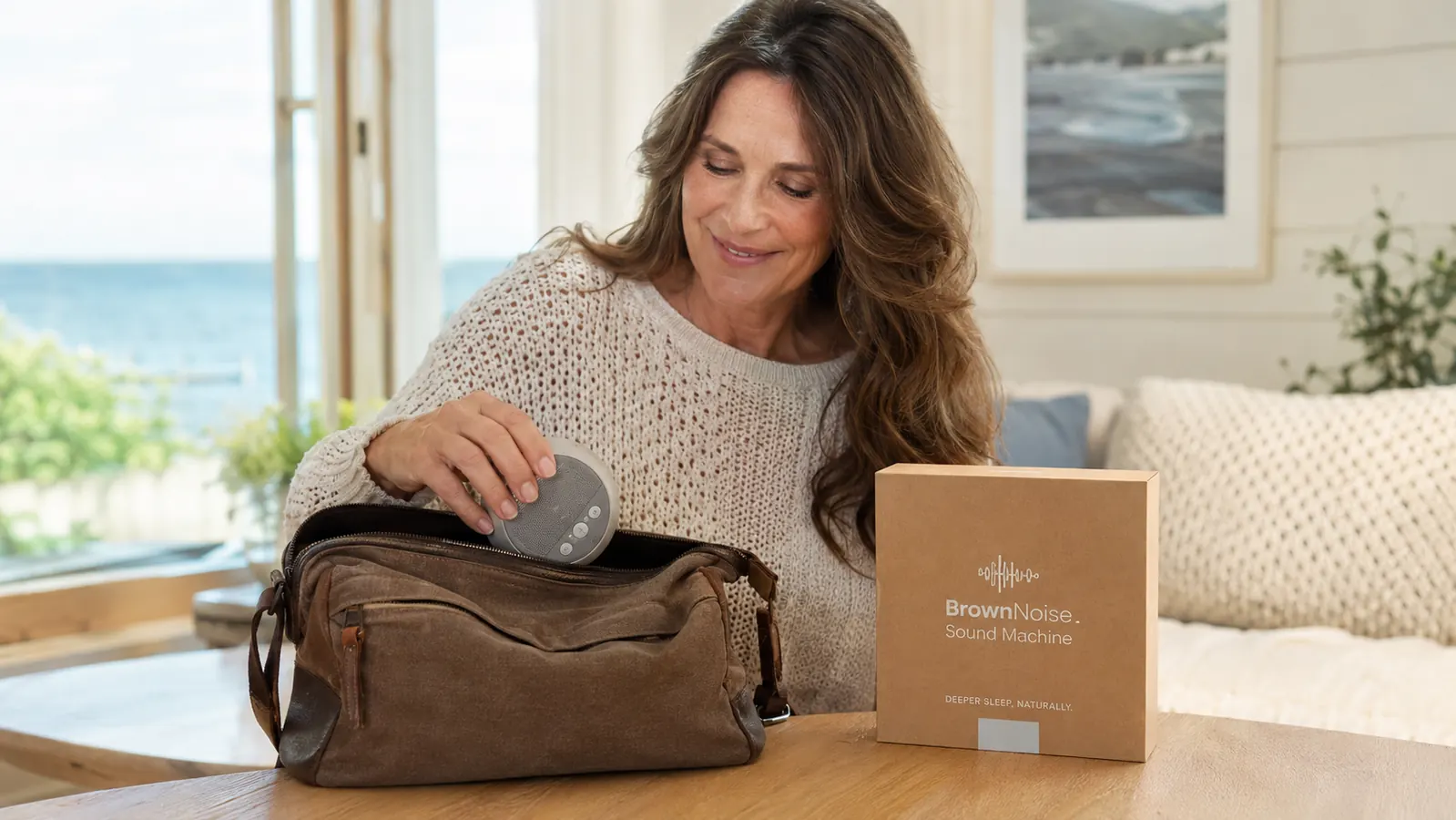
During this period I traveled once to visit my daughter in Portland for four days. I packed the BrownNoise machine. That trip alone confirmed that this had become a real part of how I sleep rather than a novelty I was testing.
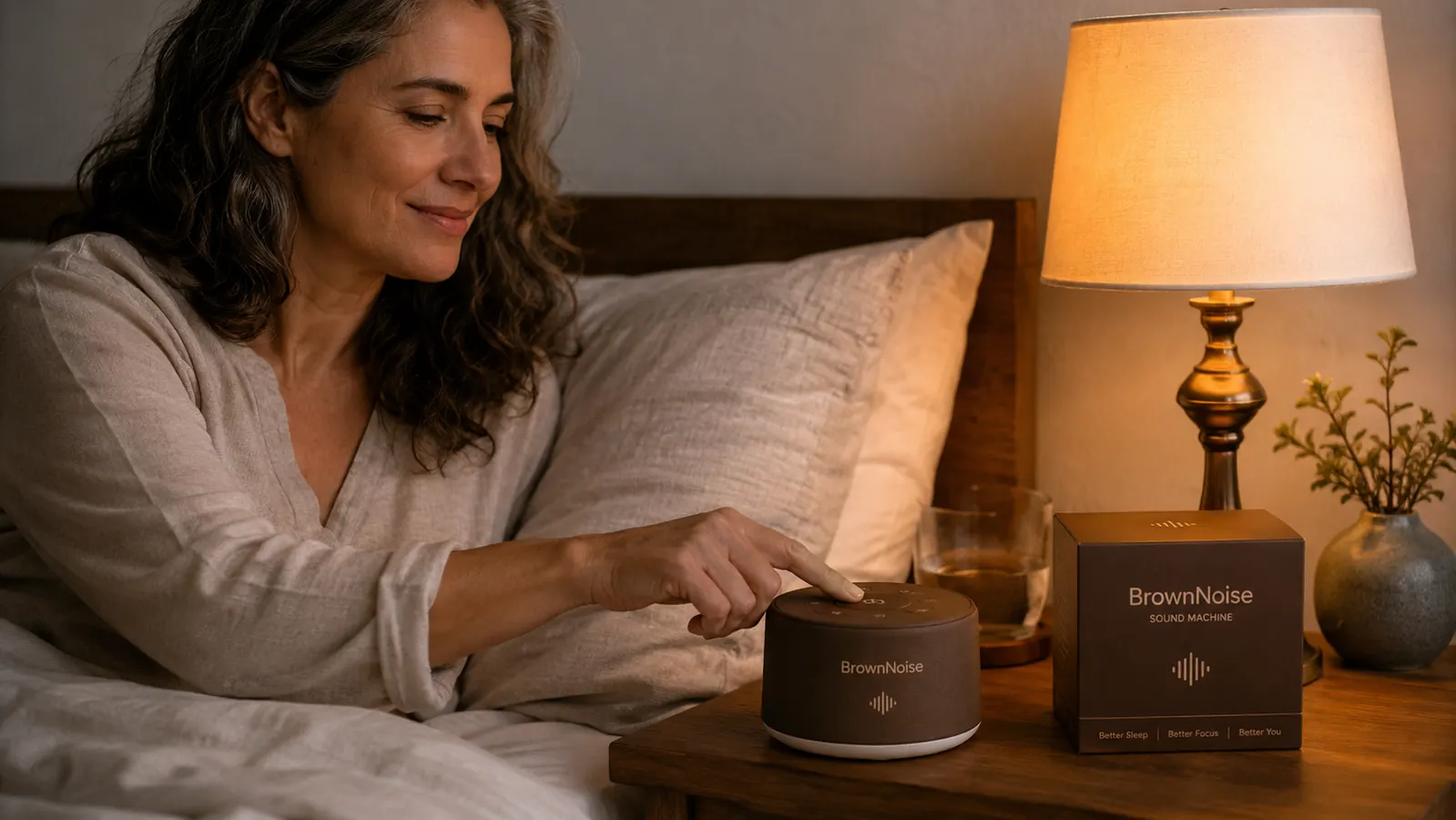
The 30 Sounds: What Is Actually Worth Using
Thirty sounds sounds like a selling point that might be mostly filler. In practice, about a third of them are genuinely useful and the rest are nice to have. The standouts from my testing are brown noise, which is lower and warmer than classic white noise and feels less like a hiss and more like a distant waterfall. It is now what I run every night. Rain on leaves is close behind it, particularly during the first ten minutes of trying to fall asleep. Ocean waves are good but the loop point is audible if you are already mostly quiet and paying attention.
The fan sounds are decent approximations, better than I expected from a speaker this size. Fireplace is pleasant for reading but not effective as a sleep masker because it has too much dynamic range, it gets louder and quieter unpredictably. The heartbeat and lullaby options clearly exist for infant use, which is fine, they just are not my category. White noise proper works, it is just harsher on my ear than brown noise after an hour or so.
What I would tell someone who is nervous about finding the right sound: spend the first week experimenting before bed rather than committing to one track the first night. Most people land on brown noise, rain, or fan within a few nights of actual use.
Brown noise is lower and warmer than classic white noise. It feels less like a hiss and more like standing near a quiet waterfall. After two nights I stopped noticing the neighbor's truck.
Does It Actually Mask Real Noise?
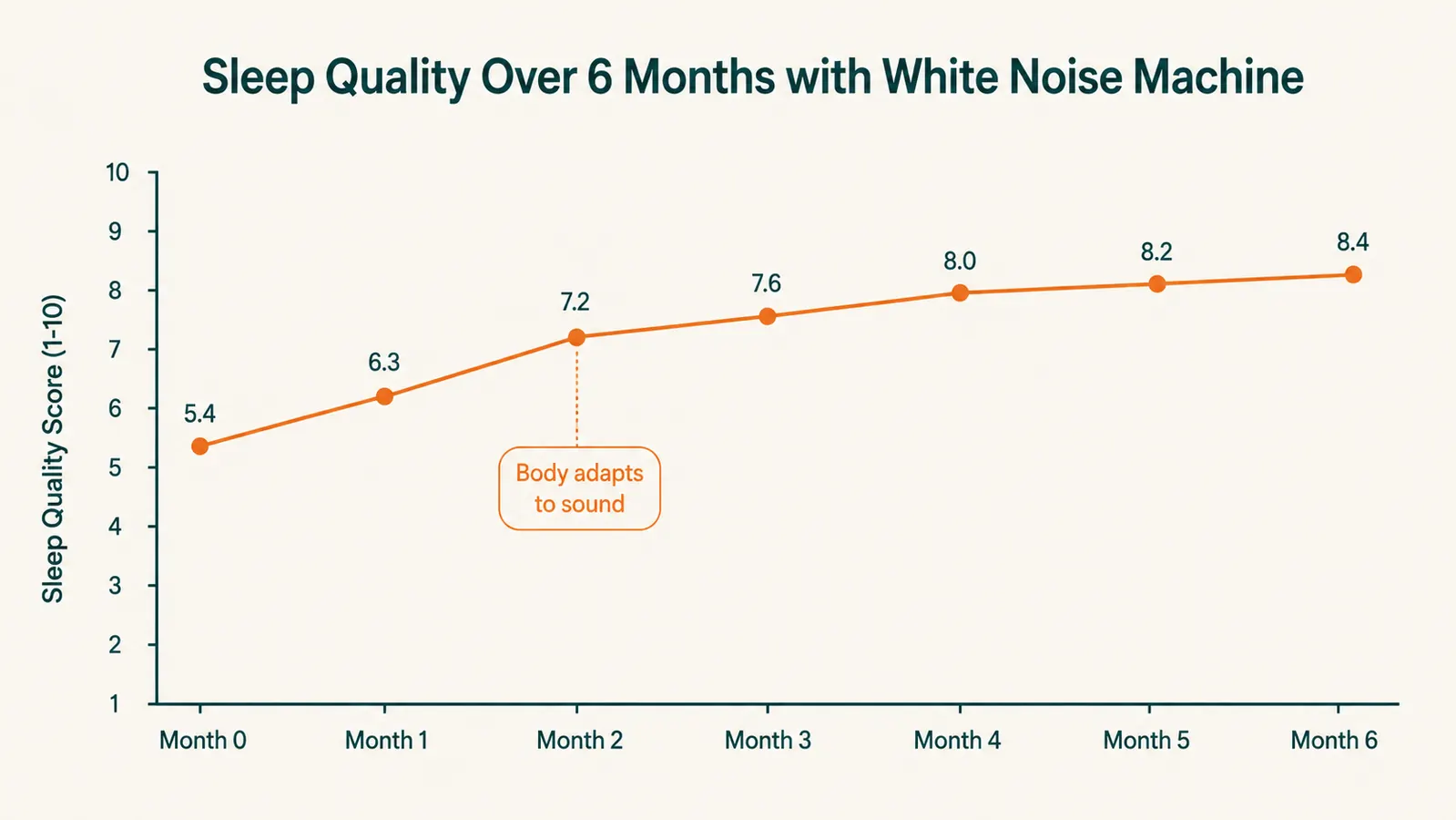
This is the question that matters. The short answer is yes, with a realistic ceiling. At about 60 percent volume, which is a comfortable listening level for a nightstand eighteen inches away, the machine effectively masks low-frequency ambient noise: traffic hum, the air conditioning unit outside, distant conversations. My neighbor's truck used to pull me from light sleep into awake. After week two it stopped registering.
High-impact sudden sounds are a different story. A car alarm right outside the window will still wake me. My own dog, a fifteen-pound terrier named Biscuit, still gets me up when he decides something requires immediate investigation at 3 AM. The machine does not make you deaf to everything, nor should it. What it does is raise the floor of the ambient sound environment so that the constant low-level noise that prevents deep sleep in the first place never gets a foothold.
The volume range goes from whisper-quiet to genuinely loud. I never go above 70 percent. For a small bedroom I suspect many people land between 40 and 65 percent. The machine does not distort at higher volumes, which I appreciate; some budget sound machines get tinny when pushed.
The 12-Color Night Light: Practical or Gimmick?
I went into this part of the review expecting to write it off as a selling point that does not matter. I was partly right and partly wrong. The night light is not a full room lamp; it is a soft glow around the bottom of the machine, similar to a very low-wattage LED nightlight. On the amber and warm red settings it is genuinely useful as a middle-of-the-night orientation light when you need to get up without fully waking yourself by switching on an overhead.
The cooler colors, blue and green, are fine but feel more like a novelty than a practical choice for sleep. I turn the light off entirely about three nights a week when I want the room fully dark, which is easy because the light and the sound are controlled independently. Having the option without being forced to use it is exactly right. I do wish the amber setting were slightly warmer, it leans a touch yellow-white rather than true amber, but at this price point I am not going to hold that against it.
Eight Weeks In: What Has Actually Changed
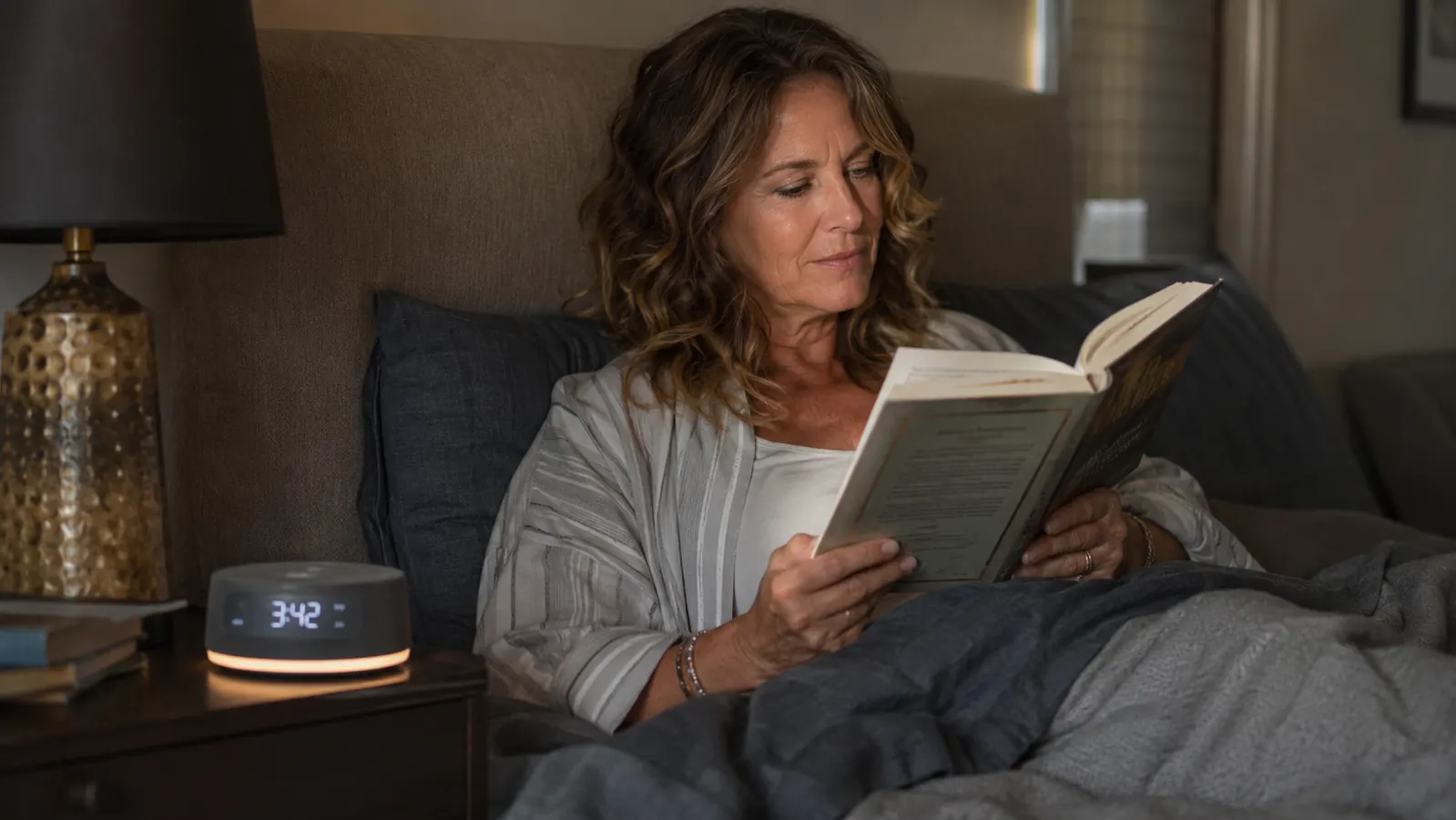
The most honest measurement I can give you is this: before the machine, I was waking between two and four times a night, usually to some external sound, usually unable to fall back within twenty minutes. For the last four weeks of my eight-week test I tracked this loosely on a notes app. I was waking once, sometimes not at all. On the nights I woke twice it was always Biscuit or an actual alarm.
I also noticed a change in how I fall asleep. I am a chronic overthinker at bedtime, the type who replays conversations from three years ago at 11 PM. The constant low hum of brown noise gives my brain something to process that is not my own mental chatter. I do not know the science behind why this works for some people and not others, but it works for me, and I have spoken to enough people in the last few weeks who have described the same thing that I do not think it is just placebo.
By week seven I had stopped using my phone to play rain sounds through a speaker before bed, which I had been doing for about three years as a stopgap. This machine replaced that habit entirely with a better result.
What I Liked
- Brown noise setting is genuinely excellent, warm and non-fatiguing over a full night
- 30 sounds means most sleepers will find something that works for them
- Volume range is broad, from barely-there to room-filling, with clean output throughout
- Night light is practical on warm settings as a gentle orientation aid
- Compact enough to pack in a carry-on for travel
- USB-C charging lets you run it from a lamp port or power bank
- Price is low enough that the risk of trying it is minimal
Where It Falls Short
- Loop point is audible on ocean waves and a few other nature sounds when the room is otherwise quiet
- Amber night light setting is slightly yellower than true warm amber
- No timer preset, you have to set it manually each night if you use the auto-off feature
- Button layout takes a few nights to learn by feel in the dark
How It Compares to a Fan or Phone App
I used a box fan for white noise for about two years before this. The fan works, but it has real downsides: it moves air (which matters in winter), it is large and loud at the mechanical level, and the pitch shifts slightly as the motor warms up, which is surprisingly noticeable once you are aware of it. A dedicated sound machine produces a consistent, stable sound without airflow, without a motor to maintain, and without taking up floor space. If you want a deeper comparison between a fan and a machine like this one, I cover that in my white noise machine vs fan comparison.
Phone apps are the other common alternative. I used one for three years. The issues are screen brightness when you reach over to adjust volume, the phone staying warm overnight from running a persistent audio app, and notifications cutting into the sound if you forget to enable Do Not Disturb. A standalone machine removes all three of those friction points. It is dedicated to one job and it does it without requiring you to manage a screen.
Who This Is For
This white noise and sound machine is a strong fit for anyone who wakes from ambient noise they cannot control: traffic, neighbors, a partner's snoring, or the kind of low-level building hum that seems to get louder the quieter everything else is. It is also well suited to people who travel frequently and want to bring a consistent sleep environment with them. The compact size and USB-C power make it genuinely packable. If you are curious about the full list of reasons a sound machine might help your specific situation, I put together a broader piece on why a sound machine helps light sleepers that covers more ground.
Who Should Skip It
If you live in a genuinely loud environment, a neighbor who plays drums or a busy highway directly outside, do not expect this machine to solve it completely. At comfortable listening volumes it raises the ambient floor but it does not soundproof. You may need it alongside earplugs or blackout curtains rather than instead of them. I would also say that if you already sleep deeply and noise is not your problem, this is not going to help. Sound machines address a specific problem. They are not a general sleep cure.
Eight weeks later, this is the single sleep accessory I would not give up.
I have tried a lot of sleep gear over the past few years, some helpful and some just taking up drawer space. This white noise and sound machine is one of the few that I genuinely miss when I forget it at home. If you are a light sleeper dealing with noise you cannot control, it is worth the price of a single night out.
Amazon Check Today's Price on Amazon →