
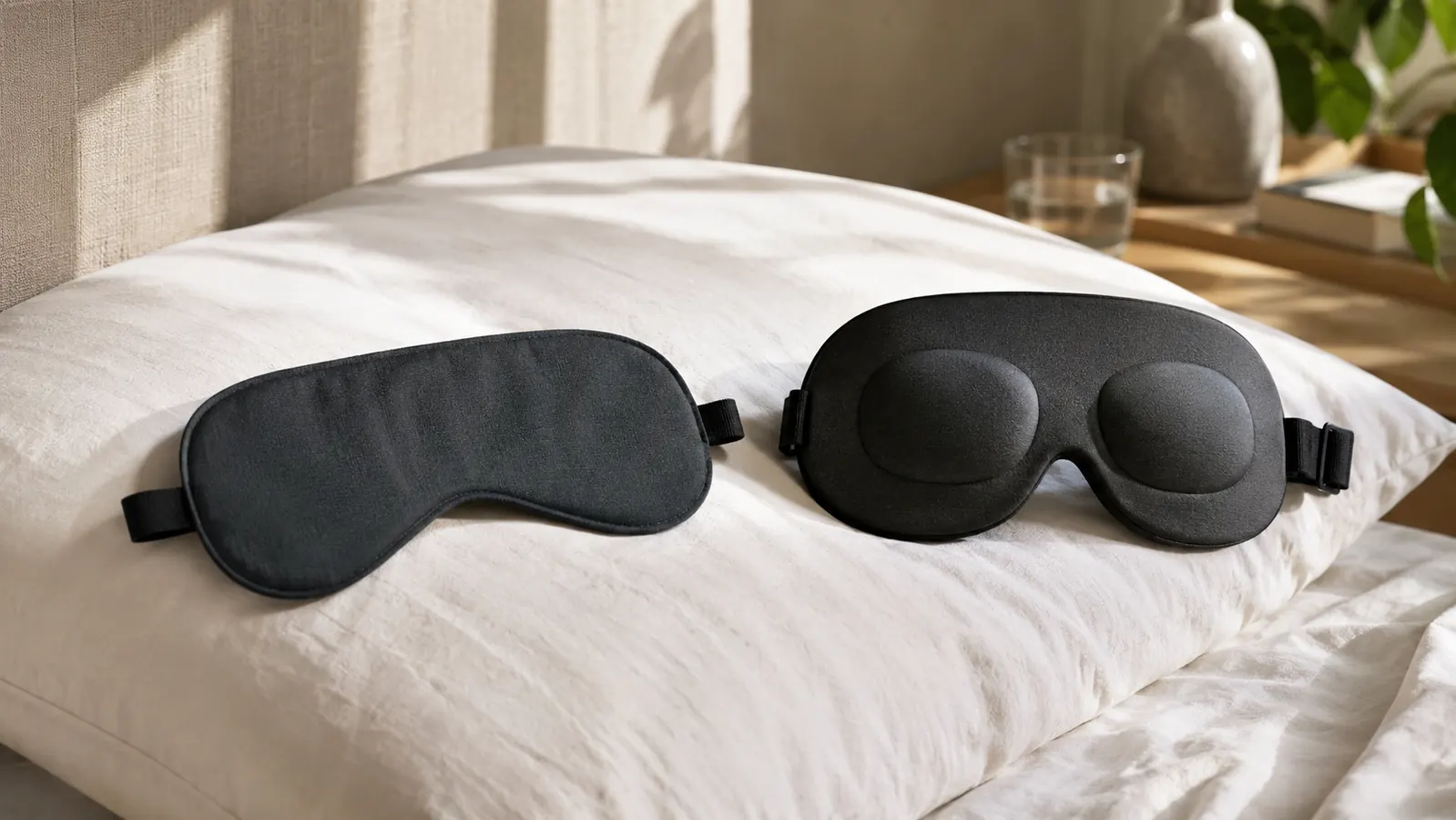
I live about three blocks from the ocean, and our bedroom faces east. By 5:15 AM in June, the light coming under those curtains is strong enough to read by. For the first three years of retirement, that was my alarm clock, every single morning, whether I wanted it or not. I tried thicker curtains. I tried sleeping on the other side of the bed. I tried a cheap satin mask I bought at the drugstore for four dollars. None of it held. Then I started comparing masks more seriously, and I realized the flat mask I had been using was the wrong tool for the problem entirely. The LKY DIGITAL 3D contoured blackout sleep mask changed that. But the difference between these two types of masks is more specific than most people realize, so let me lay it out clearly.
This is not a contest where one product is obviously superior in every way. A flat eye mask has real advantages in certain situations. What I want to do here is give you an honest side-by-side so you can figure out which one fits your situation, your sleeping position, and what is actually keeping you awake.
| 3D Contoured Mask | Flat Eye Mask | |
|---|---|---|
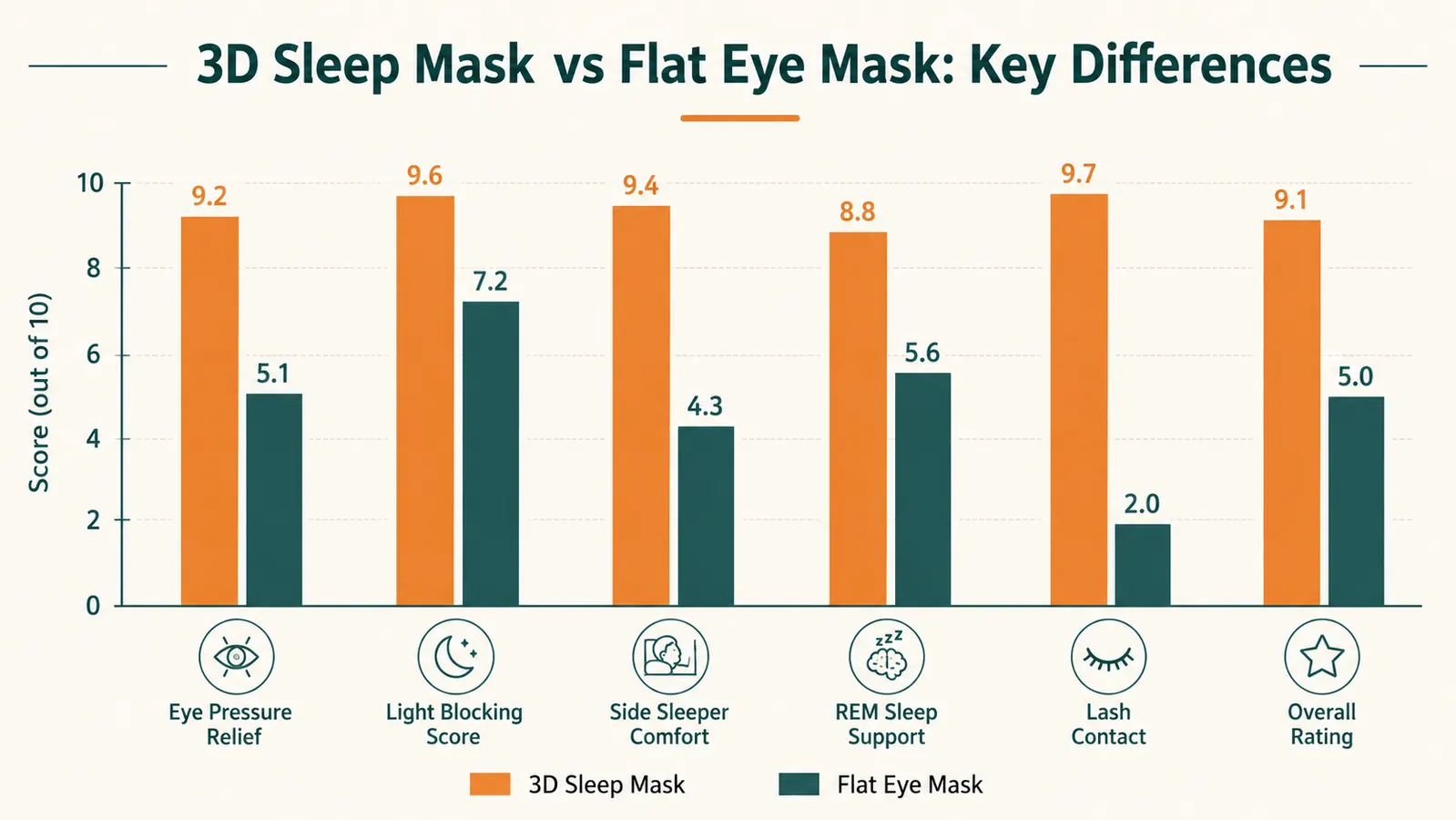
| Light blockage | Near-total blackout via raised dome cups that seal against the face without pressing on lids | Partial; fabric rests on eyelids and light gaps form at the nose bridge and cheekbone edges |
| Eye pressure | Zero contact on eyelids; cups arch over the eye leaving open space underneath | Constant light pressure on eyelids; can cause discomfort during REM movement and for contacts wearers |
| Side-sleeper fit | Adjustable elastic strap stays put on a pillow; cups are shallow enough not to push off when your face presses down | Tends to shift or pop off as the pillow compresses the mask during side sleeping |
| Breathability | Open interior cup creates an air pocket; less sweating around the eyes | Fabric sits directly on skin; can trap heat around eyes in warm rooms |
| Pack size and travel | Slightly bulkier due to cup structure; the LKY pack includes 3 masks so you always have a spare | Folds completely flat; fits in a jacket pocket or toiletry bag without taking up any space |
| Lash compatibility | Full clearance; extended lashes have no contact with the mask at all | Lashes often press against the flat fabric throughout the night, causing drag and sometimes kinking |
| Price range | LKY DIGITAL 3-pack offers good value, check today's price on Amazon | Basic flat masks are inexpensive; some silk options run higher |
| Adjustment options | Velcro-style length adjustment accommodates heads of different sizes; no metal buckle digging in | Many flat masks use a fixed elastic band with no size adjustment, creating either too-tight or too-loose fit |
| Durability | Molded cup structure holds its shape through washing; fabric stays soft after repeated use | Fabric-only masks can flatten, lose elasticity, or pill after a few months of washing |
Where the 3D Contoured Mask Wins
The biggest advantage of the LKY DIGITAL 3D mask is that it creates a physical gap between the fabric and your eyelids. That sounds like a small thing until you have worn a flat mask for six months and switched. With a flat mask, you are essentially draping cloth over your eyes and hoping it seals. It does not. Light sneaks in along the nose, along the cheeks, wherever the contour of your face creates a gap. The contoured cups on the LKY mask solve that by resting against your orbital bone, the brow ridge and the cheekbone, rather than resting on your eyelids. The seal is more consistent because it follows bone structure, not soft tissue that shifts.
Side sleepers will feel this difference most. When you press your face into a pillow, a flat mask slides, bunches, or peels away at one edge. The LKY 3D mask stays surprisingly stable because the cup structure gives it rigidity. It does not compress the way a flat mask does. I sleep almost entirely on my left side, and I was ready for this mask to be a failure the first night. It was not. I woke up in the same position I fell asleep in and the mask had not moved. That combination of total darkness and stable fit is what makes this one work where others have failed for me.
If you wear extended lashes, the contoured cup design is especially important. Flat masks drag on lashes throughout the night. The LKY mask gives your lashes full clearance. Same benefit applies for anyone who wears rigid gas permeable contacts and removes them at night but still has sensitive corneas. Zero pressure on the lid means zero discomfort from that direction. Even for people without either of those concerns, REM sleep involves a lot of eye movement. Having something pressing on your eyelids during that is not ideal, and the contoured mask removes the issue entirely.
If early light is waking you up before you are ready, this is the fix.
The LKY DIGITAL 3D blackout mask comes in a 3-pack for a budget price total, which means you can keep one by the bed, one in your travel bag, and one in the wash at the same time. Over 70,000 reviews and a 4.6 rating on Amazon. Check current pricing below.
Amazon Check Today's Price on Amazon →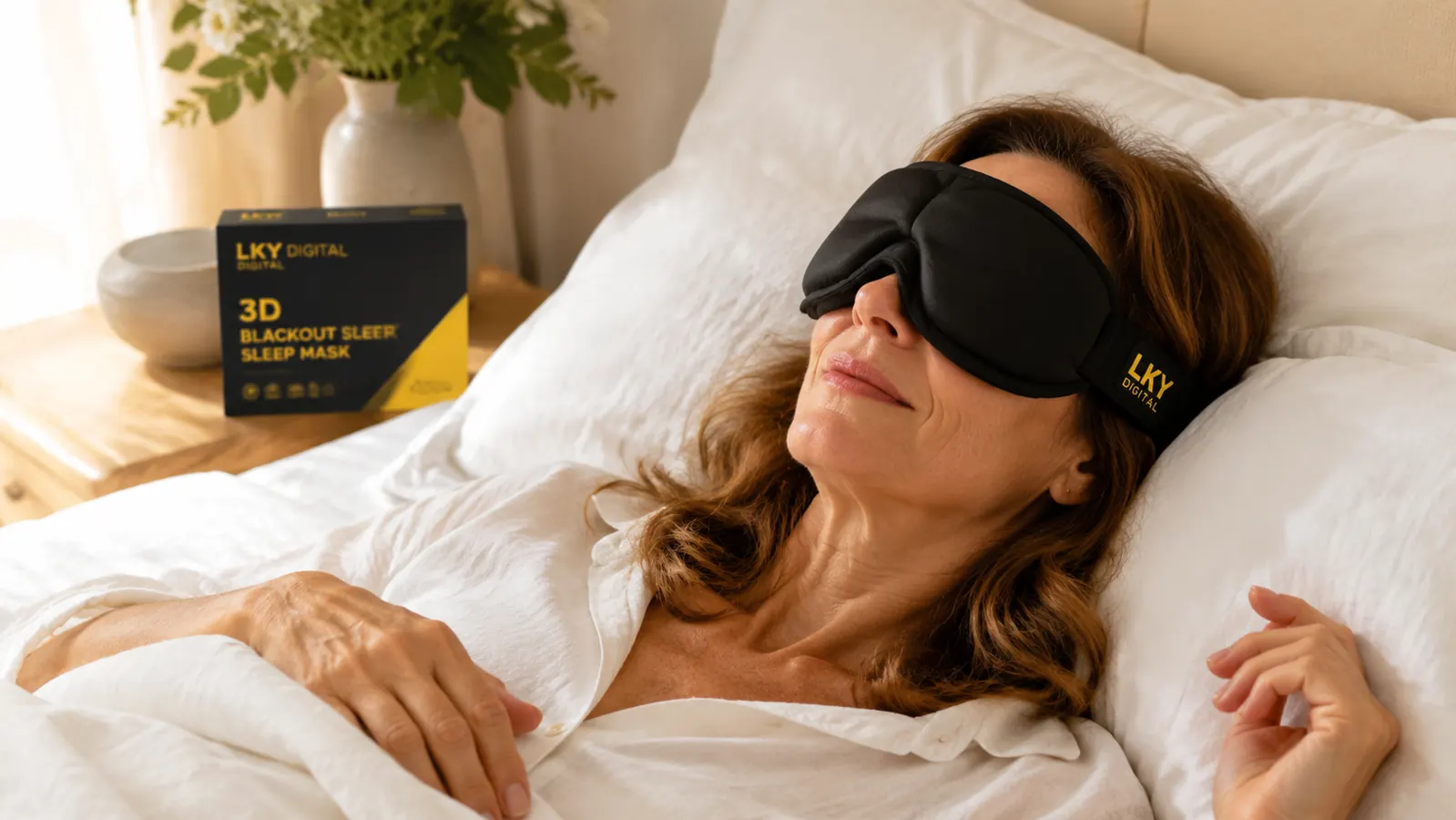
Where the Flat Eye Mask Still Wins
I do not want to write off the flat eye mask entirely, because there are situations where it genuinely makes more sense. Travel is the main one. A flat silk or satin mask folds to the size of a folded handkerchief and slips into a jacket pocket. If you are on a red-eye flight, taking a train, or sleeping at a hotel and you just need something light-blocking for a few hours, the packability of a flat mask is a real advantage. The 3D cups are lightweight, but they do not compress flat the same way. The LKY mask fits easily in a carry-on, but it will not slip into a pants pocket.
The other situation where a flat mask may be more comfortable is for strict back sleepers who do not move much. If you fall asleep on your back and wake up on your back and the mask never contacts a pillow surface, the cups are irrelevant. For those people, a well-fitted flat mask with a nose-wing seal can work just as well for light blocking. The problem is that most of us are not pure back sleepers, and even people who start on their backs tend to roll at some point. If you have any mix of side sleeping in your night, the contoured mask is the more reliable choice.
I stopped thinking about the light coming under the curtains. I stopped waking up at 5 AM. That is three months of sleeping until I was actually done, not until the sun decided I was done.
Who Should Buy the 3D Contoured Mask
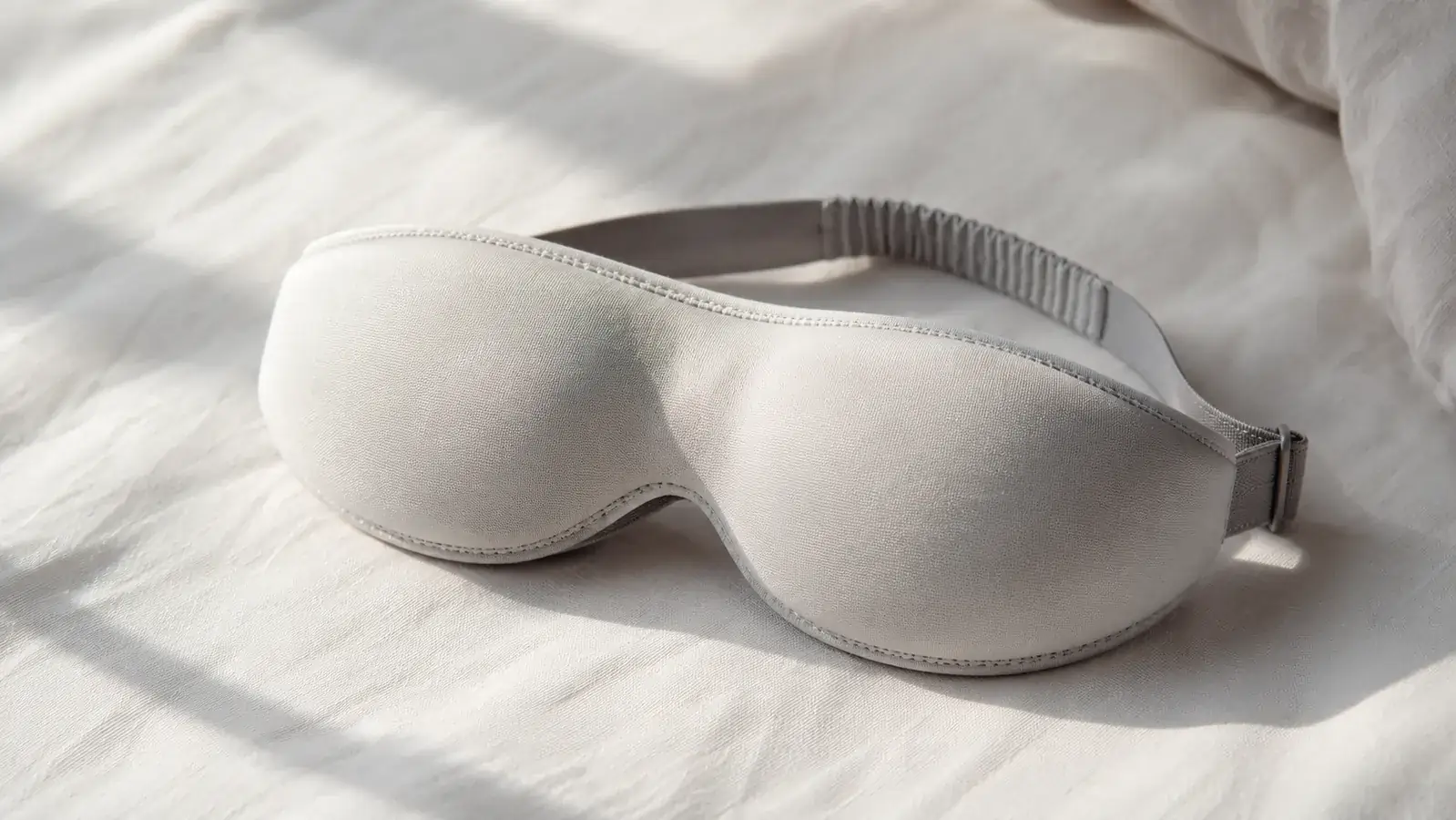
You are the right person for the LKY DIGITAL 3D blackout mask if any of these are true. You wake up when the light changes, regardless of how tired you still are. You sleep on your side at least part of the night. You have tried a flat mask before and found it uncomfortable on your eyelids, or you found it simply did not block enough light to make a difference. You wear extended lashes or have eye sensitivity. You want something that will hold up through regular washing because you plan to use it every single night, not just on planes. The 3-pack pricing also makes this a practical buy for couples, since one pack covers two people with a spare.
Who Should Skip the 3D Mask and Use a Flat One Instead
A flat mask makes more sense if your primary use case is travel or occasional naps. If you have a fully dark bedroom already and you are just using a mask as a backup layer for unusual situations, spending less on a packable flat option is reasonable. The 3D mask also requires a moment to position correctly when you put it on in the dark at night, since you need the cups to sit over your eyes rather than slide off to one side. A flat mask is more forgiving on that front. For people who are new to sleep masks and want to try the concept before committing, a flat drugstore mask is a lower-stakes first step.
A Note on Price and What You Actually Get
The LKY DIGITAL 3D mask is budget-priced for three masks on Amazon. At that price point, the comparison to flat masks gets interesting. A single decent flat mask from a brand like Alaska Bear or Sleep Mask Shop runs in the mid range. The LKY 3-pack gives you three contoured masks with better light blocking than most flat masks, for the same price or less. If you are weighing this on a per-mask basis, the math favors the 3D option almost automatically. The only caveat is that not everyone is bothered by the dome structure, and it takes one or two nights to get used to it. Some people find they prefer the flatter feel and would rather spend a bit more on a premium flat option like silk. That is a preference question, not a performance question.
Over 70,000 people have reviewed the LKY DIGITAL mask on Amazon. The rating holds at 4.6 stars across that volume, which is notable. Flat masks at similar price points typically land lower, and premium flat masks at three times the cost do not reliably outperform it for the metrics that matter most: total darkness and staying put through the night. For anyone who needs a sleep mask that genuinely works as a nightly tool rather than an occasional accessory, the 3D contoured design is the clearer choice.
If you want more detail on how I have used this mask over two months of nightly wear, including the first week adjustment period and a few things I still wish were different, you can read my full long-term review at the link below. And if you are researching whether a sleep mask in general makes a meaningful difference for light-sensitive sleepers, the honest review covers the angle nobody usually mentions.
Three masks for a budget price, and the one that actually blocks the light.
The LKY DIGITAL 3D blackout sleep mask 3-pack is consistently one of the top-rated sleep masks on Amazon, with over 70,000 reviews at 4.6 stars. Check today's price and availability using the button below.
Amazon Check Today's Price on Amazon →